
Published on: 31st October, 2019, Caravan Magazine
Author: Nidhi Suresh
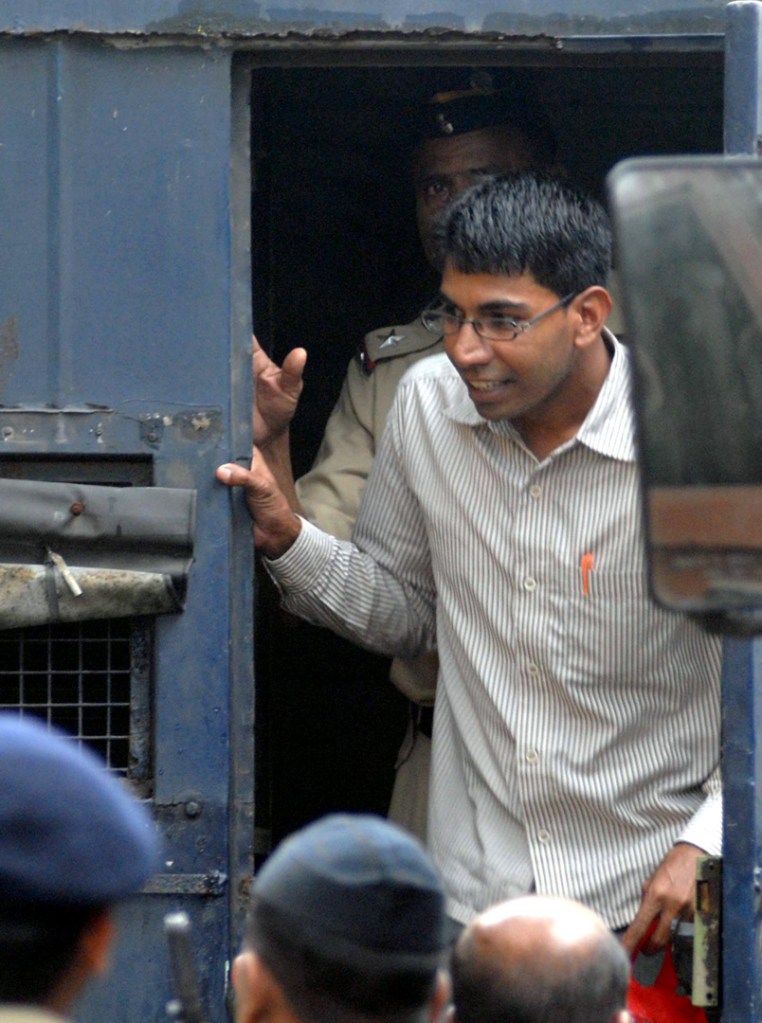
Main yahan par hazaron bandishon mein hoon”— I am here, held together by a thousand chains—Mirza Himayat Baig, a prisoner in Nashik Central Jail, wrote to his childhood friend Rehan Ahmed, in a nine-page letter, in September. In 2010, Baig was arrested after a bomb blast at the Germany Bakery cafe in Pune. The blast, which took place on 13 February 2010, killed 17 people and injured 64. Six months later, the Maharashtra Anti-Terrorism Squad arrested Baig, identifying him as the prime suspect in the case. According to Ahmed, Baig ran an internet cafe in Pune prior to his arrest.
In the letter, 39-year-old Baig detailed violations of his rights as a prisoner, the inhumane prison conditions and his deteriorating health. He said that he had been living in the “anda cell” for the last nine years. Several lawyers I spoke to said that the anda cell is a colloquial term for a high-security compound inside a prison that is egg-shaped. The cells inside are often tiny and dimly lit, with sparse ventilation and little space for movement. They are usually assigned to high-profile criminals and are, in effect, a form of solitary confinement. Its purpose is often to segregate criminals accused of serious offences, such as terror suspects, from the rest of the inmates. Baig’s case is a testimony of what prisoners endure in the anda cell and the impact of solitary confinement on their mental condition.
I accessed Baig’s letter through Ahmed, a fellow at the Innocence Network, India, a programme that advocates for the rehabilitation of those who have been acquitted post wrongful incarceration. The network is a project of the Quill Foundation, a Delhi-based research and advocacy centre where I currently work.
In April 2013, a Pune district court found Baig guilty of murder and criminal conspiracy, among other charges. The court convicted him under various sections of the Unlawful Activities Prevention Act, 1967 and the Explosive Substances Act, 2004, and awarded him the death sentence. Baig appealed to the Bombay High Court. Three years later, the court revoked his death sentence and acquitted Baig of all charges, barring two—the possession of explosives, under the Explosive Substances Act, and the possession of a forged document, under the Indian Penal Code. He was sentenced to life for the former, and Baig has challenged the high court’s judgment before the Supreme Court. The case is currently pending before the court and listed for its next hearing on 18 December.
Main yahan par hazaron bandishon mein hoon”— I am here, held together by a thousand chains—Mirza Himayat Baig, a prisoner in Nashik Central Jail, wrote to his childhood friend Rehan Ahmed, in a nine-page letter, in September. In 2010, Baig was arrested after a bomb blast at the Germany Bakery cafe in Pune. The blast, which took place on 13 February 2010, killed 17 people and injured 64. Six months later, the Maharashtra Anti-Terrorism Squad arrested Baig, identifying him as the prime suspect in the case. According to Ahmed, Baig ran an internet cafe in Pune prior to his arrest.
In the letter, 39-year-old Baig detailed violations of his rights as a prisoner, the inhumane prison conditions and his deteriorating health. He said that he had been living in the “anda cell” for the last nine years. Several lawyers I spoke to said that the anda cell is a colloquial term for a high-security compound inside a prison that is egg-shaped. The cells inside are often tiny and dimly lit, with sparse ventilation and little space for movement. They are usually assigned to high-profile criminals and are, in effect, a form of solitary confinement. Its purpose is often to segregate criminals accused of serious offences, such as terror suspects, from the rest of the inmates. Baig’s case is a testimony of what prisoners endure in the anda cell and the impact of solitary confinement on their mental condition.
I accessed Baig’s letter through Ahmed, a fellow at the Innocence Network, India, a programme that advocates for the rehabilitation of those who have been acquitted post wrongful incarceration. The network is a project of the Quill Foundation, a Delhi-based research and advocacy centre where I currently work.
In April 2013, a Pune district court found Baig guilty of murder and criminal conspiracy, among other charges. The court convicted him under various sections of the Unlawful Activities Prevention Act, 1967 and the Explosive Substances Act, 2004, and awarded him the death sentence. Baig appealed to the Bombay High Court. Three years later, the court revoked his death sentence and acquitted Baig of all charges, barring two—the possession of explosives, under the Explosive Substances Act, and the possession of a forged document, under the Indian Penal Code. He was sentenced to life for the former, and Baig has challenged the high court’s judgment before the Supreme Court. The case is currently pending before the court and listed for its next hearing on 18 December.

In his letter, Baig said that he had been in the anda cell since he was an undertrial. He added that he wrote the letter in Hindi because jail authorities are sceptical about anything written in Urdu. He insisted that Ahmed write back in Hindi and not Urdu. Baig urged Ahmed to appeal to the inspector general and the deputy inspector general of the prison to remove him from the anda cell. He wrote that his continuous incarceration in the anda cell has led to his mental and physical health rapidly deteriorating.
“There is no space to move in this cell,” he noted. “My sight is constantly bouncing off the walls and I don’t get any sleep. I have developed several illnesses because of the tension of living here.” Baig also complained of blood pressure and severely weakened eyesight. He added that he does not have access to fresh air. “Everybody has a right to open air,” he said. “I see no plants here and the colour green is so important. Because of living here for so many years, I am slipping into depression.”
Baig wrote that he had not been allowed to engage in any kind of work or craft in prison. “Like other inmates, I should also be allowed to work in the jail so that I can learn something new … and which will help me pass the time,” he said, noting that simply being removed from the anda cell will be like “adha rehayi”—partial freedom. According to Baig, he had been writing to the prison authorities to move him from the anda cell for the past several years, but had received no response.
In the letter, Baig questioned the validity of being retained in the anda cell despite being acquitted of terror charges. He added that prisoners convicted for far more serious offences, including terror cases, had not been placed in the anda cell. The authorities have cited “security” as a reason for his confinement in the anda cell, he wrote. “In the name of security, I am being kept with big gangsters in the anda cell, but I should be kept with the normal prisoners.”
Main yahan par hazaron bandishon mein hoon”— I am here, held together by a thousand chains—Mirza Himayat Baig, a prisoner in Nashik Central Jail, wrote to his childhood friend Rehan Ahmed, in a nine-page letter, in September. In 2010, Baig was arrested after a bomb blast at the Germany Bakery cafe in Pune. The blast, which took place on 13 February 2010, killed 17 people and injured 64. Six months later, the Maharashtra Anti-Terrorism Squad arrested Baig, identifying him as the prime suspect in the case. According to Ahmed, Baig ran an internet cafe in Pune prior to his arrest.
In the letter, 39-year-old Baig detailed violations of his rights as a prisoner, the inhumane prison conditions and his deteriorating health. He said that he had been living in the “anda cell” for the last nine years. Several lawyers I spoke to said that the anda cell is a colloquial term for a high-security compound inside a prison that is egg-shaped. The cells inside are often tiny and dimly lit, with sparse ventilation and little space for movement. They are usually assigned to high-profile criminals and are, in effect, a form of solitary confinement. Its purpose is often to segregate criminals accused of serious offences, such as terror suspects, from the rest of the inmates. Baig’s case is a testimony of what prisoners endure in the anda cell and the impact of solitary confinement on their mental condition.
I accessed Baig’s letter through Ahmed, a fellow at the Innocence Network, India, a programme that advocates for the rehabilitation of those who have been acquitted post wrongful incarceration. The network is a project of the Quill Foundation, a Delhi-based research and advocacy centre where I currently work.
In April 2013, a Pune district court found Baig guilty of murder and criminal conspiracy, among other charges. The court convicted him under various sections of the Unlawful Activities Prevention Act, 1967 and the Explosive Substances Act, 2004, and awarded him the death sentence. Baig appealed to the Bombay High Court. Three years later, the court revoked his death sentence and acquitted Baig of all charges, barring two—the possession of explosives, under the Explosive Substances Act, and the possession of a forged document, under the Indian Penal Code. He was sentenced to life for the former, and Baig has challenged the high court’s judgment before the Supreme Court. The case is currently pending before the court and listed for its next hearing on 18 December.
In his letter, Baig said that he had been in the anda cell since he was an undertrial. He added that he wrote the letter in Hindi because jail authorities are sceptical about anything written in Urdu. He insisted that Ahmed write back in Hindi and not Urdu. Baig urged Ahmed to appeal to the inspector general and the deputy inspector general of the prison to remove him from the anda cell. He wrote that his continuous incarceration in the anda cell has led to his mental and physical health rapidly deteriorating.
“There is no space to move in this cell,” he noted. “My sight is constantly bouncing off the walls and I don’t get any sleep. I have developed several illnesses because of the tension of living here.” Baig also complained of blood pressure and severely weakened eyesight. He added that he does not have access to fresh air. “Everybody has a right to open air,” he said. “I see no plants here and the colour green is so important. Because of living here for so many years, I am slipping into depression.”
Baig wrote that he had not been allowed to engage in any kind of work or craft in prison. “Like other inmates, I should also be allowed to work in the jail so that I can learn something new … and which will help me pass the time,” he said, noting that simply being removed from the anda cell will be like “adha rehayi”—partial freedom. According to Baig, he had been writing to the prison authorities to move him from the anda cell for the past several years, but had received no response.
In the letter, Baig questioned the validity of being retained in the anda cell despite being acquitted of terror charges. He added that prisoners convicted for far more serious offences, including terror cases, had not been placed in the anda cell. The authorities have cited “security” as a reason for his confinement in the anda cell, he wrote. “In the name of security, I am being kept with big gangsters in the anda cell, but I should be kept with the normal prisoners.”

Farrukh Rasheed, an advocate who is defending Baig in the Supreme Court, told me that the official rationale to keep Baig in the anda cell is to “protect” him from being attacked by other inmates. According to Rasheed, the decision to incarcerate an undertrial or a convict in the anda cell is up to the discretion of the jail authorities. “They face no threat”—Baig wrote, referring to the “normal” prisoners—“only I face threat despite being kept with dangerous criminals?” He added, “I am not in danger from anyone, on the contrary, I am suffering inside the anda cell.”
I also spoke to Nihal Singh, a Nagpur-based advocate, about solitary confinement in Indian prisons. Singh is defending Surendra Gadling, a lawyer and activist who has been accused in the violence that erupted in Bhima Koregaon in Maharashtra in early 2018, and is currently held in the “surakasha prison,” another kind of solitary confinement at the Yerwada Central Jail in Pune. “This kind of incarceration in the name of ‘security’ is not really for the security of the inmate, it is for the security of the prison itself,” Singh said.
While the authorities describe the anda cell using language that centres around the “protection” of the inmate, in effect, it further dehumanises the prisoners. Numerous lawyers I spoke to highlighted the legally ambiguous nature of the anda cell. Abdul Wahab Khan, a Mumbai-based criminal defense lawyer who defended Zabiuddin Ansari, an accused in terror attacks in Mumbai in November 2008, told me that Ansari was also kept in the anda cell. Khan said that the anda cell is not specifically mentioned in the Maharashtra prison manual. Lara Jesani, another advocate based in Mumbai, similarly pointed out that while the anda cell is a type of solitary confinement, it is not specifically mentioned in jail manuals. “Hence, the only way to challenge the idea of an anda cell is to challenge it through the absolutely inhuman conditions which it enforces.”
Section 73 of the IPC outlines the duration and limits of solitary confinement. It permits placing a prisoner under solitary confinement, but only for a period “not exceeding three months in the whole.” Section 74 of the IPC also states that solitary confinement cannot be indefinitely prescribed. Yet, according to his letter, Baig’s confinement appears to be contradict these provisions.
The United Nations Standard Minimum Rules for the Treatment of Prisoners, also known as the Mandela Rules, adopted by the United Nations General Assembly in December 2015, also comment on solitary confinement. Rule 45(1) instructs that solitary confinement can and must only be used as a “last resort” for “as short a time as possible” and can be “subject to independent review.” In a landmark 1979 case titled Sunil Batra vs Delhi Administration, the Supreme Court stated, “Any harsh isolation from society by long, lonely, cellular detention is penal and so must be inflicted only consistently with fair procedure.” It added, “The goal of imprisonment is not only punitive but restorative, to make an offender a non-offender.”
Main yahan par hazaron bandishon mein hoon”— I am here, held together by a thousand chains—Mirza Himayat Baig, a prisoner in Nashik Central Jail, wrote to his childhood friend Rehan Ahmed, in a nine-page letter, in September. In 2010, Baig was arrested after a bomb blast at the Germany Bakery cafe in Pune. The blast, which took place on 13 February 2010, killed 17 people and injured 64. Six months later, the Maharashtra Anti-Terrorism Squad arrested Baig, identifying him as the prime suspect in the case. According to Ahmed, Baig ran an internet cafe in Pune prior to his arrest.
In the letter, 39-year-old Baig detailed violations of his rights as a prisoner, the inhumane prison conditions and his deteriorating health. He said that he had been living in the “anda cell” for the last nine years. Several lawyers I spoke to said that the anda cell is a colloquial term for a high-security compound inside a prison that is egg-shaped. The cells inside are often tiny and dimly lit, with sparse ventilation and little space for movement. They are usually assigned to high-profile criminals and are, in effect, a form of solitary confinement. Its purpose is often to segregate criminals accused of serious offences, such as terror suspects, from the rest of the inmates. Baig’s case is a testimony of what prisoners endure in the anda cell and the impact of solitary confinement on their mental condition.
I accessed Baig’s letter through Ahmed, a fellow at the Innocence Network, India, a programme that advocates for the rehabilitation of those who have been acquitted post wrongful incarceration. The network is a project of the Quill Foundation, a Delhi-based research and advocacy centre where I currently work.
In April 2013, a Pune district court found Baig guilty of murder and criminal conspiracy, among other charges. The court convicted him under various sections of the Unlawful Activities Prevention Act, 1967 and the Explosive Substances Act, 2004, and awarded him the death sentence. Baig appealed to the Bombay High Court. Three years later, the court revoked his death sentence and acquitted Baig of all charges, barring two—the possession of explosives, under the Explosive Substances Act, and the possession of a forged document, under the Indian Penal Code. He was sentenced to life for the former, and Baig has challenged the high court’s judgment before the Supreme Court. The case is currently pending before the court and listed for its next hearing on 18 December.
In his letter, Baig said that he had been in the anda cell since he was an undertrial. He added that he wrote the letter in Hindi because jail authorities are sceptical about anything written in Urdu. He insisted that Ahmed write back in Hindi and not Urdu. Baig urged Ahmed to appeal to the inspector general and the deputy inspector general of the prison to remove him from the anda cell. He wrote that his continuous incarceration in the anda cell has led to his mental and physical health rapidly deteriorating.
“There is no space to move in this cell,” he noted. “My sight is constantly bouncing off the walls and I don’t get any sleep. I have developed several illnesses because of the tension of living here.” Baig also complained of blood pressure and severely weakened eyesight. He added that he does not have access to fresh air. “Everybody has a right to open air,” he said. “I see no plants here and the colour green is so important. Because of living here for so many years, I am slipping into depression.”
Baig wrote that he had not been allowed to engage in any kind of work or craft in prison. “Like other inmates, I should also be allowed to work in the jail so that I can learn something new … and which will help me pass the time,” he said, noting that simply being removed from the anda cell will be like “adha rehayi”—partial freedom. According to Baig, he had been writing to the prison authorities to move him from the anda cell for the past several years, but had received no response.
In the letter, Baig questioned the validity of being retained in the anda cell despite being acquitted of terror charges. He added that prisoners convicted for far more serious offences, including terror cases, had not been placed in the anda cell. The authorities have cited “security” as a reason for his confinement in the anda cell, he wrote. “In the name of security, I am being kept with big gangsters in the anda cell, but I should be kept with the normal prisoners.”
Farrukh Rasheed, an advocate who is defending Baig in the Supreme Court, told me that the official rationale to keep Baig in the anda cell is to “protect” him from being attacked by other inmates. According to Rasheed, the decision to incarcerate an undertrial or a convict in the anda cell is up to the discretion of the jail authorities. “They face no threat”—Baig wrote, referring to the “normal” prisoners—“only I face threat despite being kept with dangerous criminals?” He added, “I am not in danger from anyone, on the contrary, I am suffering inside the anda cell.”
I also spoke to Nihal Singh, a Nagpur-based advocate, about solitary confinement in Indian prisons. Singh is defending Surendra Gadling, a lawyer and activist who has been accused in the violence that erupted in Bhima Koregaon in Maharashtra in early 2018, and is currently held in the “surakasha prison,” another kind of solitary confinement at the Yerwada Central Jail in Pune. “This kind of incarceration in the name of ‘security’ is not really for the security of the inmate, it is for the security of the prison itself,” Singh said.
While the authorities describe the anda cell using language that centres around the “protection” of the inmate, in effect, it further dehumanises the prisoners. Numerous lawyers I spoke to highlighted the legally ambiguous nature of the anda cell. Abdul Wahab Khan, a Mumbai-based criminal defense lawyer who defended Zabiuddin Ansari, an accused in terror attacks in Mumbai in November 2008, told me that Ansari was also kept in the anda cell. Khan said that the anda cell is not specifically mentioned in the Maharashtra prison manual. Lara Jesani, another advocate based in Mumbai, similarly pointed out that while the anda cell is a type of solitary confinement, it is not specifically mentioned in jail manuals. “Hence, the only way to challenge the idea of an anda cell is to challenge it through the absolutely inhuman conditions which it enforces.”
Section 73 of the IPC outlines the duration and limits of solitary confinement. It permits placing a prisoner under solitary confinement, but only for a period “not exceeding three months in the whole.” Section 74 of the IPC also states that solitary confinement cannot be indefinitely prescribed. Yet, according to his letter, Baig’s confinement appears to be contradict these provisions.
The United Nations Standard Minimum Rules for the Treatment of Prisoners, also known as the Mandela Rules, adopted by the United Nations General Assembly in December 2015, also comment on solitary confinement. Rule 45(1) instructs that solitary confinement can and must only be used as a “last resort” for “as short a time as possible” and can be “subject to independent review.” In a landmark 1979 case titled Sunil Batra vs Delhi Administration, the Supreme Court stated, “Any harsh isolation from society by long, lonely, cellular detention is penal and so must be inflicted only consistently with fair procedure.” It added, “The goal of imprisonment is not only punitive but restorative, to make an offender a non-offender.”
CURRENT ISSUE
Testimonies of numerous former anda cell detainees have shown that the conditions inside this cell are particularly grim. GN Saibaba, an English professor at Delhi university, spent 14 months in the anda cell of Nagpur Central Jail for his alleged involvement with the banned Communist Party of India (Maoist). After his release on bail on grounds of medical treatment, he wrote a detailed account on his time in the Anda cell in a January 2016 issue of Frontline:
The official policy is that prisons should be correctional homes where criminals are reformed and sent back to join society, but in practice they are designed to kill the will of an individual, especially the anda cell. The anda cell in Nagpur prison has 32 lock-ups in four yards. People can interact from 6 am to 12 noon and from 3 pm to 6 pm within each yard. The sky is not visible, and in the yard there is a grill on the top. It is difficult to retain one’s mental balance inside an anda cell. I met some prisoners who had spent years in an anda cell and lost their balance completely and yet were not shifted out.
The journalist Tekendra Parmar described anda cells in a report for The Nation, a US-based weekly magazine. “Reserved for the most notorious of criminals and terrorists, the anda is an egg-shaped barracks comprising several solitary-confinement units 10 feet in length and width,” he wrote. “The anda cell is designed to crush its captives’ psyches.”
The activist Arun Ferreira also wrote about his time in the anda cell at the Nagpur Central Jail. “The anda barracks are a cluster of windowless cells,” he wrote. “To get to most cells from the anda entrance, you have to pass through five heavy iron gates. … There are several distinct compounds within the anda, each with a few cells, each cell carefully isolated from the other. There’s little light in the cells and you can’t see any trees. You can’t even see the sky.” Ferreira made an ironic observation while describing the anda cell. “The yard resembles an enormous, airtight concrete egg,” he said. “But there’s a vital difference. It’s impossible to break it open. Rather, it’s designed to make inmates crack.”
The Nashik jail authorities did not respond to my email seeking their comments.
“The letter shows how bad Baig’s condition is,” Ahmed told me. “Something needs to be done. For nine years we have been trying everything possible to seek justice for him and neither the state, police or civil society organisations have done anything to help him be removed from the anda. Atleast if the media talks about it, there will be some pressure on those responsible for him to take some action.”
After close to a decade in the anda cell, it is no surprise that Baig said he sees no way of normal reintegration into society even if he is released. While he still hopes for freedom, his thoughts seem to have been shaped deeply by his imprisonment. “Sometimes I feel that whenever Allah offers me freedom,” he wrote, “I will come out and go away from everyone and live a life of a lone hermit.”
Source: https://caravanmagazine.in/law/himayat-baig-solitary-confinement-anda-cell
 innocencenetworkindia.family.blog